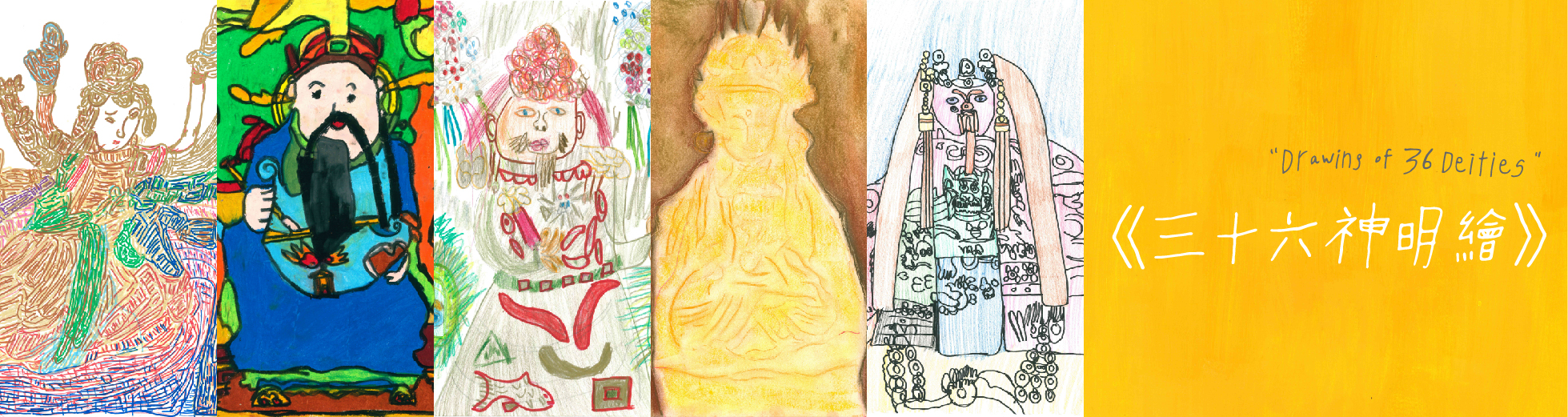
三十六神明繪本計劃 Drawing of 36 Deities Project
|
神明介紹 Introduction of Deity |
功能 Function |
誕辰 Festival |
|
|
文昌帝君 Man Cheong, God of Literature |
文昌,生於晉朝公元287年。掌管著教育事務和政府官員的陞遷。每年文武廟舉行一年一度的大型酬神祈福祭典「文昌 啟智禮」,讓有緣善信工作如意,步步高陞;莘莘學子聰明勤奮,學業有成。 Man Cheong (the God of Literature), born in AD 287 during the Jin Dynasty, oversees education affairs and the government official's promotion. Every year, Man Mo Temple organises the Man Cheong Enlightenment Rites to give believers smooth careers and outstanding academic achievements. |
求學業功名 Seeking outstanding academic results |
農曆二月初三 3rd day of 2nd lunar month |
|
包公丞相 Prime Minister Bao Zheng |
包公(999-1062),蘆洲合肥人(今安徽省合肥市),為北宋名臣包拯。包公以廉潔公正,鐵面無私,不畏強權,破解種種冤 案,故有「包青天」之外號。 Prime Minister Bao Zheng (Pau Kung) (999-1062), born in Hefei, Luzhou (present-day Hefei City, Anhui Province), was a prominent government official in the Northern Song Dynasty. He was incorruptible, fair, unbiased and undaunted. Having solved numerous cases of injustice, he was hailed as Justice Pau. |
賞善罰惡 Rewarding good deeds and punishing bad deeds |
農曆六月初六 6th day of 6th lunar month |
|
天后娘娘 Tin Hau |
天后(又稱媽祖),生於北宋初年福建莆田湄洲。相傳天后有預測天氣變化的異能,救了不少出海的漁民。每年農曆三月二十 三日,油麻地天后廟舉辦的油麻地天后誕,是一個集廟會和傳統文化的慶祝活動,以祈求社區平安,風調雨順,國泰民安。 Tin Hau (Mazu) was born in Meizhou, Putian, Fujian, in the early years of the Northern Song Dynasty. Tin Hau was said to have the supernatural power to predict weather changes and saved many fishermen who went out to sea. Every year on the 23rd day of the 3rd lunar month, Tin Hau Festival is held in Tin Hau Temple, Yaumatei. Believers pray for peace, good weather and good fortune of the community at the temple fair and traditional celebratory event.
|
出海平安、漁獲豐收 Safe voyage; abundant catch |
農曆三月二十三日 23rd day of 3rd lunar month |
|
和合二仙 Immortals of Harmony and Unity |
關於和合二仙之傳說聚眾多,於唐貞觀年間,和合二仙指兩位詩僧,分別為塞山和拾得。和合原指婚姻,後期延伸至人緣, 意指與夫妻相處和睦、家庭和合等。 There are many legends about the Immortals of Harmony and Unity (Two Gods of He-He). In the Zhenguan reign of the Tang Dynasty, the Immortals of Harmony and Unity referred to two poet monks, Hanshan and Shide. In ancient times, "HeHe" referred to marriage. The meaning of the term was later extended to include interpersonal relationships and implied harmonious marriage and family. |
美好姻緣、人緣暢旺 Happy marriage; good interpersonal relationships |
農曆六月二十四 24th day of 6th lunar month |
|
北帝 Pak Tai, Zhenwu Heavenly Emperor of Xuan Tian of the North |
北帝的信仰源於北宋時期,乃主理北方的天神。在香港,由於北方五行屬水,北帝被視為水神,為水上人所信奉。 The reverence of Pak Tai, who oversees the north, originated in the Northern Sung Dynasty. In Hong Kong, north is attributed to "water" in the Five Elements. Pak Tai is thus considered a water deity and is worshipped by boat dwellers. |
求水上平安 Safe voyage |
農曆三月初三 3rd day of 3rd of lunar month |
|
福德Fook Tak, Earth God |
福德正神負責地方事務、管理土地及世間財富的民間大神。早在漢代已有土地記載,當時形象沒有分男女,後來祂被人格 化成老公公模樣及有土地婆相伴。 Fook Tak is an important deity in folk religion who oversees local affairs as well as manages land and wealth. As early as the Han Dynasty, there had been records of the Earth God. Yet, the deity was not gendered then. It was only in later times that the deity was personified as an elderly man accompanied by Grandmother Earth. |
求財富 Seeking wealth |
農曆二月初二 2nd day of 2nd of lunar month |
|
三官大帝 Three Great Emperor-Officials |
三官大帝即天官、地官及水官,代表對天、地、水的崇拜。地位僅次於玉帝。祂們各有職司︰天官賜福、地官赦罪、水官 消災解厄之意。 The Three Great Emperor-Officials, namely the Heavenly Official, Earthly Official and Water Official, represent the worship of the heavens, the earth and water. They rank just below the Jade Emperor. Each of them has their own duty: the Heavenly Official gives blessings; the Earthly Official pardons sins; the Water Official expels evil and misfortune. |
催吉避凶 Bringing good fortune and keeping away bad fortune |
天官誕 Tin Kwun Festival 農曆正月十五 15th day of 1st of lunar month 水官誕 Shiu Kwun Festival 農曆十月十五日 15th day of 10th lunar month 地官誕(又稱中元節) Tei Kwun Festival (Ghost Festival) 農曆七月十五 15th day of 7th lunar month |
|
財神God of Wealth
|
財神,趙公明,又稱趙元帥,負責處理天下財富的財神。每逢農曆正月初五為接財神日,視為財神下凡日子,民間會在這 天「接財神」,祈求來年財源滾滾來。 The God of Wealth, Zhao Gongming (also known as Marshal Zhao), is responsible for all wealth on earth. Every year on the 5th day of the 1st lunar month, people welcome the God of Wealth from heaven and pray to him for abundant wealth in the coming year. |
求財富 Seeking wealth |
農曆七月二十二日 22nd day of 7th lunar month |
|
魯班先師 Lo Pan |
魯班原名公輸般或公輸班,因生於魯國(現今山東省),而被稱為魯班。春秋時期的著名木匠發明家。後世的三行工匠稱他為工 匠祖師,奉為魯班先師,於各地興建魯班廟奉祀祂。 Lo Pan was born Gongshu Pan or Gongshu Ban in the State of Lu - thus the name Lo Pan (Lu Ban). He was a prominent carpenter and inventor during the Spring and Autumn Period. Carpenters worship him as their teacher in Lo Pan Temples across the world. |
特殊職業神 The god of builders and contractors |
農曆六月十三日、五月初七 13th day of 6th lunar month, 7th day of 5th lunar month |
|
貴人祿馬 Benefactor and Auspicious Horse
|
貴人祿馬是由籤卦被形象化為神明。祿為官貴,馬為財,貴人是指命中扶助的人;祿馬則有幫助升職之意。在民間傳統, 善信會用紅線將八字與馬腳綁起,祈求工作順利、貴人扶持及升職。 The Benefactor and Auspicious Horse are originally divinatory symbols on fortune-telling sticks. The Auspicious Horse symbolises high officialdom and wealth. While the Benefactor refers to someone who offers help to an individual, the Auspicious Horse means promotion for government officials. In traditional customs, worshippers tie a person's "eight characters (year, month, day and hour of birth)" to the leg of the Auspicious Horse with red string, to praying for a smooth career, help from benefactors and promotion at work. |
求工作順利 Luck for work |
|
|
韋佗尊者 Skanda
|
韋佗尊者為一名戰士。源於印度婆羅門教,於唐代傳入中國。韋佗尊者是一位身穿金盔鐵甲、護持佛法並手持金剛杵的年 輕將軍,於各佛寺廟宇中負責看守佛寺的護教菩薩,保護道場及出家人。 Skanda is a warrior. Originated from Brahmanism of India, the deity was introduced to China in the Tang Dynasty. A young general dressed in golden amour, defending the Dharma and holding a vajra, Skanda is a protector deity responsible for protecting religious venues as well as monks and nuns. |
問一般凶吉 Fortune telling |
農曆六月初三 3rd day of 6th lunar month |
|
斗姆元君 Doumu, Mother of the Great Chariot |
斗姆元君,原本指北斗七星之母,期後演化成天上眾星之母,其造型三頭六臂。在元明時期,道士聲稱祂為紫光夫人,一 胎生了九子︰兩位長子為天皇大帝和紫微大帝,其餘七位兒子名稱以天上星宿命名。 Doumu, Mother of the Great Chariot, originally referred to the mother of the Seven Stars of the Northern Dipper. With three heads and six arms, she later evolved into the mother of all stars. During the Yuan and Ming Dynasties, Taoists priests called her Lady Purple Rays. She gave birth to nonuplets: her first two sons were the Great Emperor of Heaven and the Great Emperor of Middle Heaven North Star, while the other seven stars were named after stars in the sky. |
擋煞消災、求壽 Bringing good fortune and keeping away bad fortune; goddess of life |
農曆九月初九 9th day of 9th lunar month |
|
女媧娘娘Nuwa |
女媧,為伏羲之妹妹,為中國神話的創世人物。相傳,天地開闢之初,女媧摶土造人,為大地創造人類, 並負責安排男女的婚姻,被喻為母親神。 Nuwa, the younger sister of Fuxi, is depicted as a creator goddess in Chinese mythology. It is believed that, in the beginning of time, Nuwa created people from clay and was responsible for matching men and women in matrimony. She is known as a mother goddess. |
美好姻緣、人緣暢旺 Happy marriage; good interpersonal relationships |
|
|
玉皇大帝 Jade Emperor |
玉皇大帝是由唐代封建社會的皇權思想產生的稱號,又被稱為天公。掌管天地萬物、陰陽造化。 The Jade Emperor, also known as Tian Gong, originated from Imperialism in the feudal society of the Tang Dynasty. The deity oversees all life on earth as well as the underworld. |
問一般凶吉 Fortune telling |
農曆正月初九 9th day of 1st of lunar month |
|
準堤佛母Cundi
|
相傳準堤佛母是觀音大士六個化身之一,擁有三目十八臂,坐在水蓮花之上。有消除厄運,延年益壽及增長智慧的能力。 According to legend, Cundi was one of the six incarnations of Kwun Yum. With three eyes and 18 arms, he sits on a lotus flower floating on water. He can expel misfortune, as well as bring people longevity and wisdom. |
求壽、保護小孩 Goddess of life, protecting children |
農曆三月十六 16th day of 3rd lunar month |
|
千里眼, 順風耳 Qianliyan & Shunfeng’er |
千里眼與順風耳:天眼通能窺探萬物、有天耳通能聽到所有聲音。祂們是媽祖駕前兩位將軍,為媽祖偵察世上一切。 Qianliyan and Shunfeng'er: The all-seeing eyes can see everything; the all-hearing ears can hear all sounds. The deities, guardians of Mazu, help the goddess keep watch over the earthly world. |
問一般凶吉 Fortune telling |
|
|
金童玉女Sudhana & Longnu |
金童玉女指侍奉神仙的童男童女侍從,民間會在新婚或新年年掛上金童玉女像,寓意早生貴子、招財進寶。 Sudhana and Longnu are child servants of celestial beings. At weddings or during Lunar New Year, people put up their portraits in the hope that sons will be born and wealth will be earned.
|
|
|
|
黑白無常 The Black and White Guards |
黑白無常為閻王的部將,負責引領亡魂,協助賞善罰惡。黑無常名為范無救,白無常名為謝必安。兩位生前本是衙差, 死後被玉帝冊封為地府官差。 The Black and White Guards are subordinates of the King of Hell. They are responsible for guiding the spirits of the deceased as well as rewarding good deeds and punishing bad deeds. The Black Guard was called Fan Wujiu; the White Guard was named Xie Bi'an. During their life time, they were guards at the Yamen. After they died, they were appointed guards of the underworld by the Jade Emperor. |
求財富 Seeking wealth |
農曆七月二十二 22nd day of 7th of lunar month |
|
十殿閻王 Ten Yama Kings |
十殿閻王源於古印度神話,其後經佛教傳入中國。十王各有不同職司,分別審判亡者生前罪業,並施以刑罰。 The Ten Yama Kings originated from ancient Indian mythology, and was later introduced to China through Buddhism. The ten kings have different roles: they judge the deceased for the sins they commit during their lifetime and punish them for their sins. |
賞善罰惡 Rewarding good deeds and punishing bad deeds |
秦廣王誕 Birthday of King Qinguang 農曆二月初一 1st day of 2nd lunar month 楚江王誕 Birthday of King Chujiang 農曆三月初一 1st day of 3rd lunar month 宋帝王誕 Birthday of King Songdi 農曆二月初八 8th day of 2nd lunar month 五官王誕 Birthday of King Wuguan 農曆二月十八日 18th day of 2nd lunar month 閻羅王誕 Birthday of Emperor Yanluo 農曆正月初八 8th day of 1st lunar month 泰山王誕 Birthday of King Taishan 農曆三月二十七日 27th day of 3rd lunar month 都市王誕 Birthday of King Pingdeng 農曆四月初一 1st day of 4th lunar month 平等王誕 Birthday of King Dushi 農曆四月初八 8th day of 4th lunar month 卞城王誕 Birthday of King Kacheng 農曆三月初八 8th day of 3rd lunar month 轉輪王誕 Birthday of King Lunzhuang 農曆四月十七 17th day of 4th lunar month |
|
觀音大士 Kwun Yum |
觀音(觀世音菩薩)為佛教的四大神祇,據說觀音能尋聲苦救,遇難眾生呼喚觀音菩薩之名,祂便隨著聲音前往施救,以慈悲 心去普渡眾生。每年農曆正月廿六日為「觀音開庫」,起源於明末清初時,廣東民眾於當日舉辦「生菜會」,取生菜與「生 財」同音,剛好正月廿六日更為白衣觀音誕,民眾同時祈求觀音庇佑財運亨通,生意興隆。時至今日,「觀音開庫」仍吸引 大批善信前來借富,另外亦借健康、人緣、學業等。 Kwun Yum (the Bodhisattva of Compassion) is one of the Four Great Deities of Buddhism. It is said that Kwun Yum can follow the cry of people in distress and rescue them, relieving people from suffering with benevolence. According to folk belief, Kwun Yum Treasury Festival is held every year on the 26th day of the 1st lunar month. The festival originated in the late Ming and early Qing dynasty, when the people of Guangdong Province held "saang-coi-wui (lettuce gathering)", as "lettuce" and "gaining wealth" have similar pronunciations in Cantonese. Since Kwun Yum Festival also falls on the 26th day of the 1st lunar month, people began praying to Kwun Yum for wealth, fortune and success in business. Until today, large numbers of believers attend Kwun Yum Treasury Festival to pray for wealth, health, good interpersonal relationships and outstanding academic results. |
問一般凶吉 Fortune telling |
觀音誕 農曆二月十九,六月十九,九月十九,十一月十九 Kwun Yum Festival 19th day of 2nd lunar month, 19th day of 6th lunar month, 19th day of 9th lunar month, 19th day on 11th lunar month 觀音開庫 農曆正月廿五至廿六 Kwun Yum Treasury Festival 25th to 26th day of 1st lunar month |
|
呂祖Luzu |
呂祖(又稱呂洞賓),為八仙中之一。相傳是河中府永樂縣人漢鍾離的徒弟。被神化來勸喻人們要盡忠行孝、積善除邪。 Luzu (also known as Lu Dongbin) is one of the Eight Immortals. He was said to be the apprentice of Han Zhongli of Yongle County, Hezhong Prefecture. Lu was deified to teach people they should be loyal, observe filial piety, practise benevolence and expel evil. |
問一般凶吉 Fortune telling |
農曆四月十四 14th day of 4th lunar month |
|
王母娘娘 Queen Mother of the West |
王母娘娘最初被指為元祖天尊與太玄聖母的女兒,後被說成玉皇大帝的皇后。 Queen Mother of the West was first thought to be the daughter of the Primeval Lord of Heaven and Taixuan Nu. She was later hailed as the queen of the Jade Emperor. |
問一般凶吉 Fortune telling |
農曆七月十八 18th day of 7th of lunar month |
|
齊天大聖 Monkey King |
齊天大聖是由神魔小說演變出來的神衹,早在宋朝話本《大唐三藏取經詩畫》已有記載。後來明人吳承恩創作《西遊記》。 The deity Monkey King originated from novels about deities and evil beings. He first appeared in the Song Dynasty huaben (novella) Da Tang Sanzang Qu Shijing Hua (Tang Sanzang's Quest for the Scripture), and subsequently in Journey to the West by Wu Cheng'en. |
問一般凶吉 Fortune telling |
農曆八月十六日 16th day of 8th lunar month |
|
黃大仙Wong Tai Sin |
黃大仙,原名黃初平,又名赤松子。黃大仙少年時是一位牧羊童,後到金華赤松山石室修煉叱石成羊仙術,故被稱赤 松黃大仙。 Wong Tai Sin, born Wong Cho Ping, is also known as the Red Pine Immortal. When he was young, he was a shepherd boy. He later practised austerities in a stone chamber in Red Pine Mountain, Jinhua, and mastered the magic of turning stones into sheep. Thus, he was hailed "Wong Tai Sin, the Red Pine Immortal". |
問一般凶吉 Fortune telling |
農曆八月廿三日 23rd day of 8th lunar month |
|
門神 Door God |
門神能保護居所,擋煞消災,捉鬼治邪。唐朝名將秦叔寶和尉遲恭是香港最常見的門神。 The Door God protects residences, expels evil and fends off ghosts. Prominent Tang dynasty generals Qin Shubao and Wei Chigong are common Door Gods in Hong Kong. |
捉鬼治邪,催吉避凶 Expelling ghosts and evil; Bringing good fortune and keeping away bad fortune |
正月十五 15th day of 1st of lunar month |
|
周倉 / 關平 Zhou Cang / Guan Ping |
關聖帝君有兩個陪神 - 關平和周倉。捧印的關平是關聖帝君的長子;持刀的周倉原是羅貫中筆下《三國演義》中的人物。 Kwan Tai has two deities by his side, Guan Ping and Zhou Cang. Guan Ping, who holds a seal, is the eldest son of Kwan Tai; Zhou Cang, holding a sabre, is a character in Romance of the Three Kingdoms by Luo Guanzhong.
|
問一般凶吉 Fortune telling |
關平誕 農曆五月十三日 Birthday of Guan Ping 13th day of 5th lunar month 周倉誕 農曆十月十三日 Birthday of Zhou Cang 13th day of 10th lunar month |
|
濟公活佛 Chai Kung |
濟公佛,本姓李,名心遠或修元,出生於台州府天台縣(今浙江臨海縣),為南宋名僧。據說,濟公經常裝瘋賣傻,亦酒肉當 食,不守戒律,衪路見不平,拔刀相助,為民請命的形象深入民心,成為百姓心中的英雄。 Chai Kung (Jigong, or Jigong the Living Buddha), born Li Xinyuang (or Xiuyuan) in Tiantai County, Taizhou (present-day Linhai County, Zhejiang Province), was a renowned monk in the Southern Song Dynasty. It is said that Chai Kung often pretended to be insane, and ate meat as well as drank wine. He did not observe religious taboos. Yet, he never hesitated to help people who fell victim to injustice and became a revered hero. |
捉鬼治邪、驅疫治病求健康 Expelling ghosts and evil; curing epidemics and diseases; seeking health |
農曆四月初八,八月廿五 8th day of 4th lunar month, 25th day of 8th lunar month |
|
Tai Sui 六十太歲 |
太歲,是由太歲神的觀念衍生而成的道教神祇群,共有六十個。道教引用中國古代傳統的紀年方法,認為宇宙每六 十年一個循環,每年各有一個太歲神負責,於是創造了六十太歲神來值年。 Tai Sui – there are 60 of them – are Taoist deities derived from the concept of Taisui Shen, the Chinese God of Time. Drawing on the traditional Chinese year numbering system, Taoism believes the universe completes one cycle in 60 years, and a Tai Sui deity is responsible for each year. |
吉祥昇運,催吉避凶 Bringing good fortune and keeping away bad fortune |
|
|
灶君Kitchen God |
灶君本負責掌管飲食,後來成了監察人間善惡的特使,有賞善罰惡的能力。民眾拜祀灶君以求祂在玉帝面前美言幾 句,保一家平安。 Originally responsible for eating and drinking, the Kitchen God later became a special envoy who rewarded good deeds and punished bad deeds. People who worship the Kitchen God ask him to put in a good word for them with the Jade Emperor and protect their family. |
賞善罰惡 Rewarding good deeds and punishing bad deeds |
八月初三 3rd day of 8th lunar month |
|
地藏王 Ksitigarbha |
相傳,地藏王是目蓮,為救出墜落於地獄的母親,許下「地獄不空、誓不成佛」的宏願。 According to legend, Ksitigarbha was in fact Maudgalyayana. In order to save his mother from hell, he pledged that "he would not become a Buddha unless hell is empty". |
捉鬼治邪、賞善罰惡 Expelling ghosts and evil; rewarding good deeds and punishing bad deeds |
農曆七月三十 30th day of 7th lunar month |
|
金花娘娘Lady Golden Flower |
相傳金花娘娘本名金花。被人們傳為巫女,遭人鄙視,最後跳湖自盡。死後屍身數日不壞,旁邊更浮出與其容貌相似的 木像。 Lady Golden Flower was originally known as Jinhua (golden flower). She was rumoured to be a witch and threw herself into a lake because she was despised. A few days after the death, her body still had not decayed, whereas a wooden statue resembling her emerged in the water beside her body. |
求生育 Bringing child |
農曆四月十七 17th day of 4th of lunar month |
|
洪聖大王 Hung Shing |
洪聖,為唐朝刺史,通曉天文地理,協助漁民預測天氣,以平安出海捕魚謀生,故此漁民紛紛為此「南海水神」立廟以祈求 家宅平安,風調雨順,漁獲豐收。 Hung Shing was a government official in the Tang dynasty. Knowledgeable in astrology and geography, he helped fishermen predict the weather and return home safely from their fishing trips. Therefore, fishermen began to worship him as the "God of the South Sea", praying to him for good weather and abundant catch. |
出海平安、漁獲豐收 Safe voyage; abundant catch |
農曆二月十三 13th day of 2nd lunar month |
|
關聖帝君 Mo Tai, God of Martial Arts |
關聖帝君,關羽。他生於公元160年,三國時期。因為他的英勇善戰,他成了忠誠正直的象徵。他的神像手持寶刀,象徵著 他高超的武藝。現在無論是交朋友還是商業活動,中國人仍十分注重忠誠和正直的品格。 Mo Tai, Kwan Yu (the God of Martial Arts) is hailed as Kwan Kung (Guangong). He was born in AD 160 during the Three Kingdoms Period. Due to his bravery and fighting skills, he became a symbol for loyalty and integrity. He is depicted holding a precious sabre, which symbolises his exceptional martial skills. In today's Chinese society, loyalty and integrity are still highly valued in friendships or commercial activities. |
忠義仁勇、生意興隆 Loyalty, integrity, benevolence and bravery; prosperous business |
農曆六月二十四 24th day of 6th lunar month |
|
城隍尊神 Shing Wong |
城隍,城即指城牆,隍即指護城河,亦是保護城市的神。古人供奉城隍以求神保護城池,驅鬼避邪等,各級城隍負責監管 陰間的大小二事,以鑒察善惡,驅除惡鬼。現今,城隍仍為彰善懲惡之神祇,掌管陰陽兩域,承擔分辦是非,斥責惡行之 重任。 Shing Wong (City God) is the protector god of a city. The first word in the name means the walls of the city, whereas the second word refers to the moat. People in ancient China worshipped Shing Wong in return for protection of their city, as well as protection from ghosts and evil. City gods of different rankings oversee matters in the underworld, monitoring good deeds and bad deeds, and expelling ghosts and evil. Today, Shing Wong is a good extolling and evil punishing deity in charge of the earthly world and the underworld. |
賞善罰惡 Rewarding good deeds and punishing bad deeds |
農曆五月十一、七月廿四 11th day of 5th lunar month, 24th day of 7th lunar month |
|
王靈官Wong Ling Kun, Protector of Faith |
王靈官(王天君),原名王善,北宋人,到了明朝衪被奉為天將,被差遣辦事小護法,有護法、保鑣之意。道觀廟宇正殿大門 處奉祀王靈官神像或畫像,視為侍衛,阻擋妖邪入侵。 Wong Ling Kun (Wang Tianjun) was born Wang Shan in the Northern Song Dynasty. In the Ming Dynasty, he was named a heavenly general responsible for safeguarding Taoist teachings. The statue or portrait of Wong Lin Kun is revered at the main entrance of Taoist temples. He guards the door and fends off evil. |
捉鬼治邪 Expelling ghosts and evil |
農曆六月二十七日 27th day of 6th lunar month |
|
燃燈佛Dipankara |
佛教認為佛有三世,分別為未來的彌勒佛、現世的釋迦牟尼佛和過去的燃燈佛。相傳,因出生時身邊滿是光芒,故稱為燃 燈佛。 In Buddhism, there are three incarnations of the Buddha, namely Maitreya of the future, Gautama Buddha of the present and Dipankara Buddha of the past. Legend has it that Dipankara was enveloped in light at birth, thus the name Dipankara (lamp bearer |
催吉避凶 Bringing good fortune and keeping away bad fortune |
農曆八月廿二 Dipankara 22nd day of the 8th lunar month |